Sunny Bank Mills
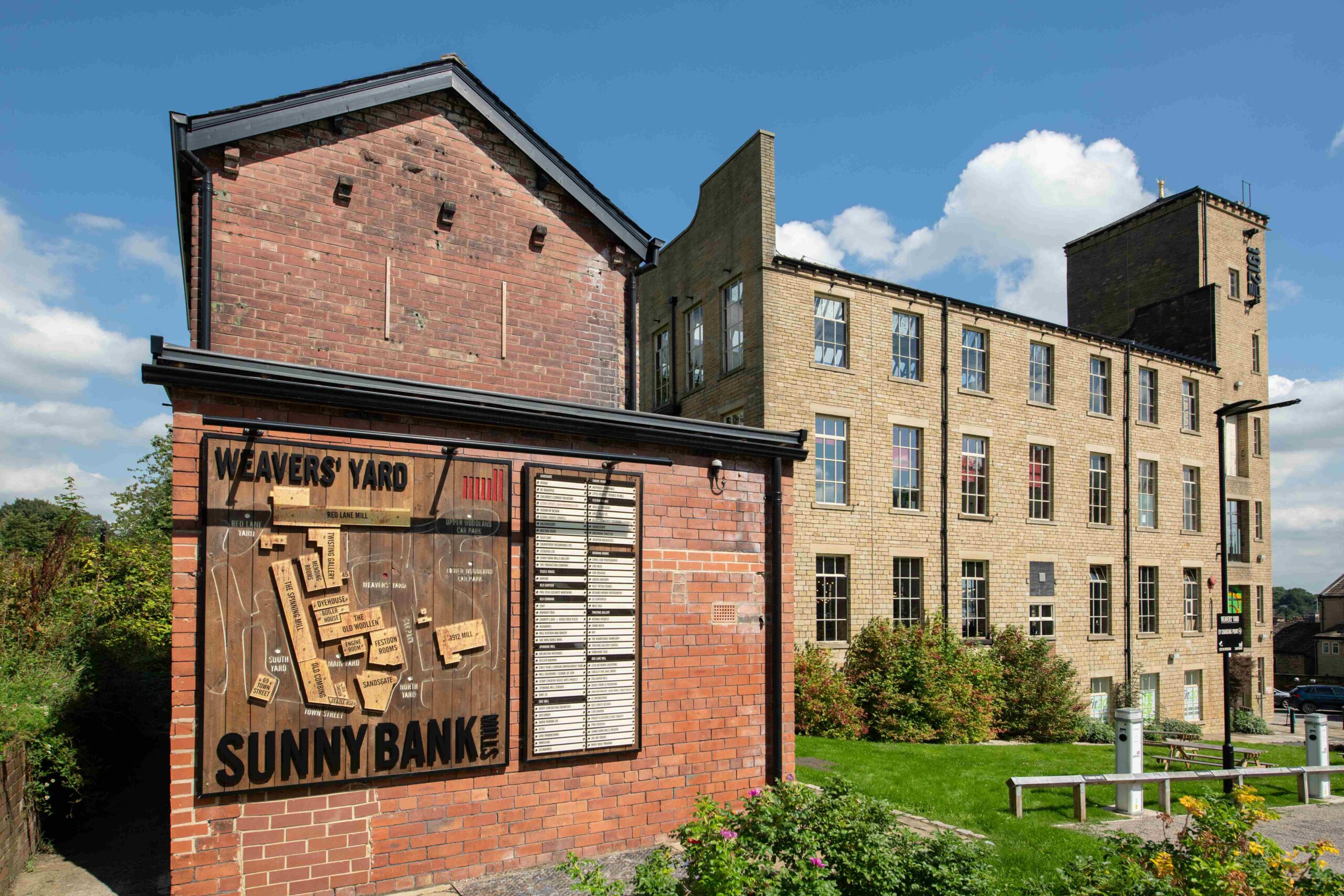
Sunny Bank Mills, a former textiles mill in Farsley, Leeds, has been transformed into a flourishing space for local artists, creatives and artisans. Winning the inaugural Yorkshire Business Insider Placemaking ‘Best Use of Heritage in Placemaking’ Award in 2024, today Sunny Bank Mills interlaces its industrial heritage with the work of local makers and artist communities.
Sunny Bank has been funded by:
- National Lottery Heritage Fund
- Arts Council England National Lottery
A stitch in time: textile mill regeneration suits local creatives
180+ years of textile heritage
73,000+ curated artefacts
400+ people employed
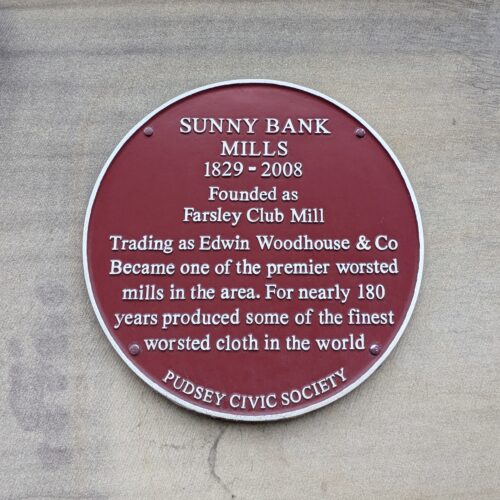
Originally the Farsley Club Mill, Sunny Bank Mills began in 1829 as a woollen scribbling and fulling mill, established by local clothiers who invested together to buy land and building materials. John Gaunt was one of the trustees overseeing the mill, and today his descendants are continuing his legacy as the mills’ current owners. Over the last 20 years, their ambitious vision has diversified the site’s income generation, transforming empty mill buildings into a variety of artistic, artisanal, retail and office spaces. Additionally, Sunny Bank Mills Museum & Archive preserves and promotes Yorkshire’s textile heritage.
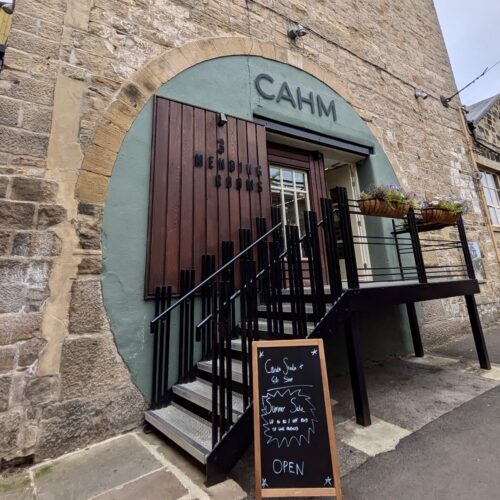
The imaginative reuse of industrial heritage
Since the working textile Mill’s closure in 2008, Sunny Bank Mills has benefitted from an ambitious multi-millionpound regeneration programme to bring modern business and creativity to the Mill, to reclaim the site’s old status as the biggest employer in West Leeds, and to create an abundance of creative spaces. Parts of the site are used as filming locations for national TV series, including Heartbeat, Emmerdale and The Great British Sewing Bee. As of 2025, the Mill has employed around 400 people and involved over 1,000 artisans, artists and makers.
A material world
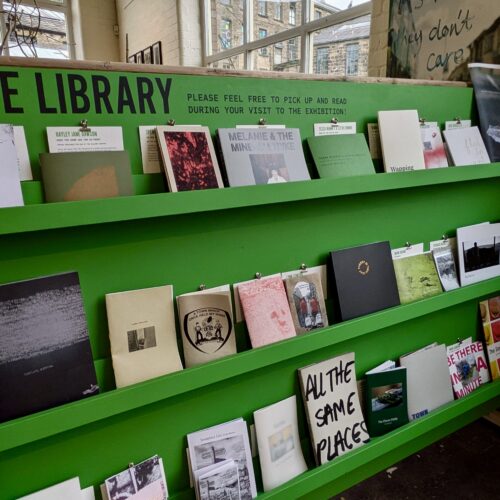
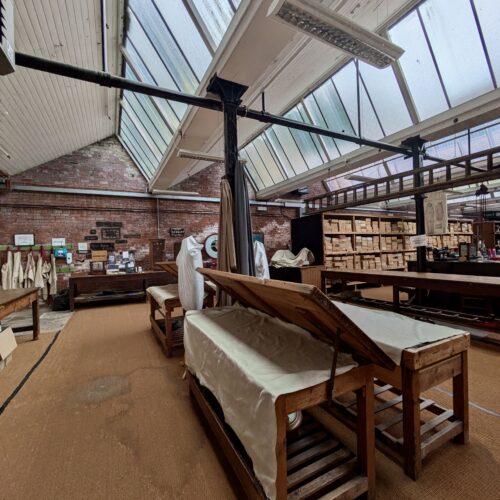
The Mill’s Museum & Archive is brimming with 73,000 artefacts associated with almost 200 years of textile production, the scale and quality of which rivals that of international collections like the V&A. It also provides opportunities for 20 volunteers who are on-hand to assist with research projects and community workshops. In the last decade, Sunny Bank Mills Gallery has displayed more than 85 imaginative exhibitions. Meanwhile, local architects carried out internal conservation projects on the site and ten intricately restored Ramsden handlooms are now used to teach traditional heritage weaving skills.
Industrial boom and bust
Sunny Bank Mills was founded by a group of local clothiers who came together to purchase land and set up the Farsley Club Mill. From the 1880s to the 1910s, Sunny Bank Mills quickly grew under the influence of key shareholder owner Edwin Woodhouse, who introduced worsted spinning and weaving. Now a local legend, the 900 local millworkers employed across the Farsley area were nicknamed ‘Woodhouses’. The Mill thrived well into the 1960s, but in 2008, the recession forced it to cease production permanently.
Weaving the future
Sunny Bank Mills is run by Edwin Woodhouse & Co, a company set up in 1962 by Derek Alfred Gaunt to reclaim the Mill. The company’s viable business plans meant they secured a vital planning permission agreement with Leeds City Council in 2015 to redevelop the site flexibly. The Sunny Bank Mills Museum & Archive is a registered charity and unique resource representing over 180 years of cloth production at the site and the lives of those who worked there.